Let's talk
Let us know which of the Shipnet Suite of software tools interests you, and we'll get back to you to discuss how we can help.
Feb 3, 2026
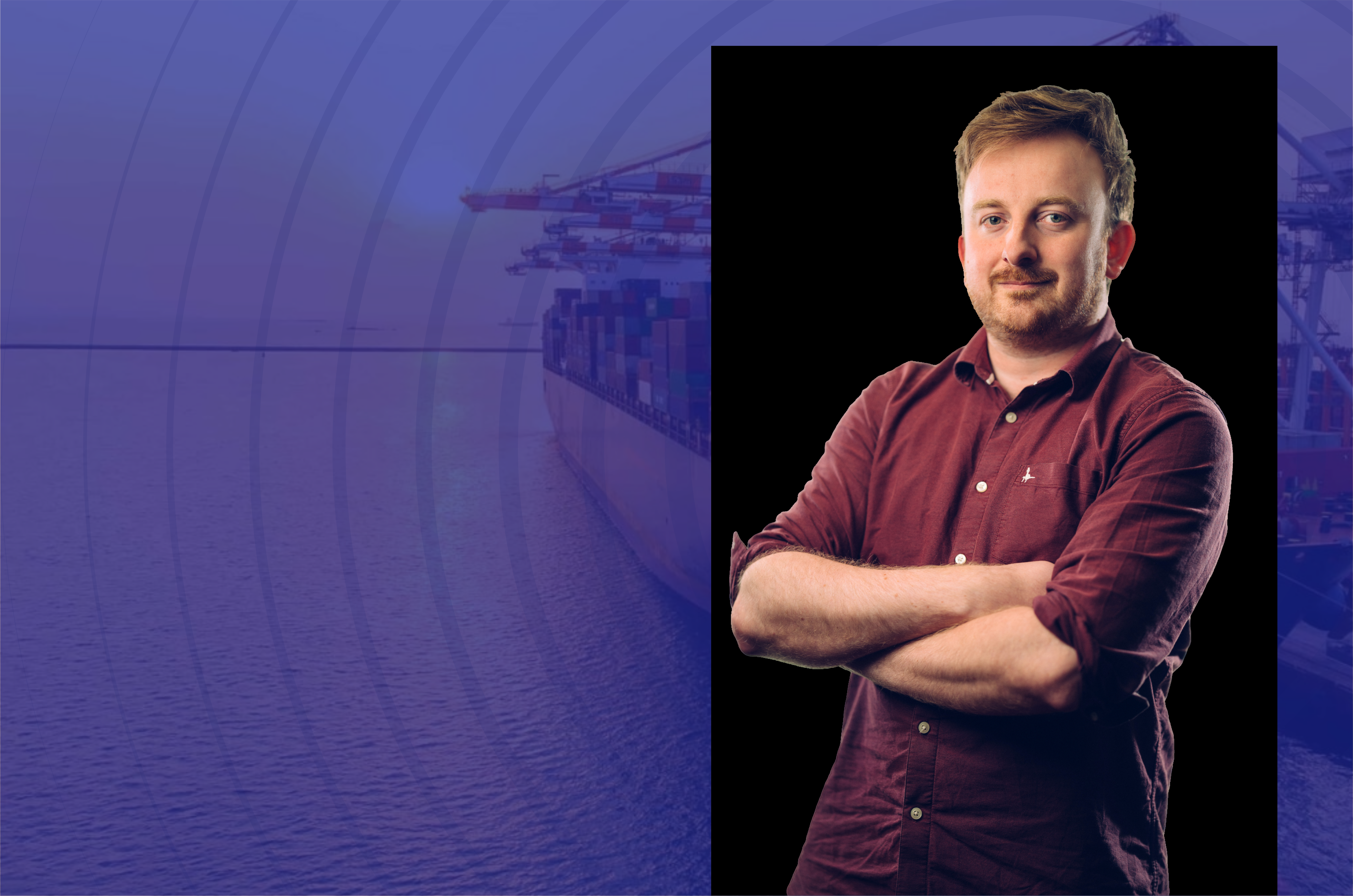
My career at sea has given me plenty of firsthand experience of maritime operations - the good days, the difficult ones, and everything in between. Those experiences have shaped how I view the role systems and processes play in supporting crews and shoreside teams.
On oil and gas tankers, working worldwide, standing watch, managing safety, dealing with the realities of day-to-day operations. Like many in maritime, I’ve seen the industry at its best - and under pressure. During lockdown, that included being stuck at anchor in Antigua for months. Not the worst place in the world, but a sharp reminder of how much we rely on systems, processes, and people working together properly when circumstances aren’t ideal.
One thing has always been true:
maritime operations are complex by nature.
They have to be. Safety, compliance, commercial performance and operational efficiency all matter - and none of them can be treated lightly.
But over time, something else has crept in.
For many teams, managing the system has become part of the job itself.
Anyone who has worked onboard or supported vessels shoreside will recognise this pattern:
None of this comes from bad intentions. Most systems evolve that way - shaped by regulations, customisation, and years of trying to solve specific problems.
But the result is friction.
It shows up as:
Over time, the system stops supporting the job - and starts competing with it.
Maritime will never be simple.
But that doesn’t mean the tools supporting it should add to the load.
The best systems I’ve seen - onboard and ashore - do a few things well:
When software works this way, something important happens:
people get their attention back.
Across maritime - and across other industries - expectations are changing.
Progress no longer means bigger systems or more configuration.
It means clearer, sharper tools that respect the realities of the job.
At Shipnet, we’re spending time reflecting on this shift - informed by real operational experience - and on how software can better support the people using it every day.
Not by asking more of them.
But by handling the complexity so they don’t have to.
More on that soon.
Ready to talk? Get in touch today ...

Niall Jack
Chief Technical Officer